Lineart: A Modern Display Font for Elegant Typography
What is Lineart?
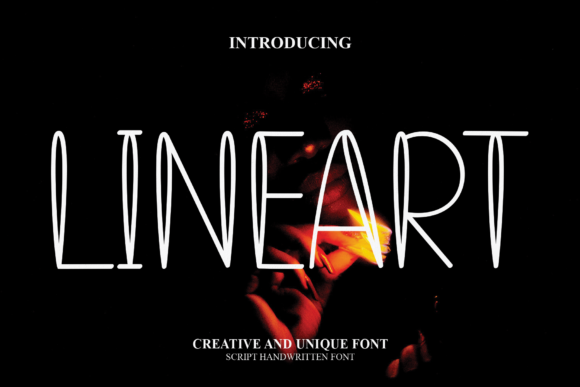
Lineart is a creative and unique display font that merges minimalist line work with refined elegance. Designed for impact and authenticity, it stands out in the crowded Display category by prioritizing clean geometry, intentional negative space, and subtle character personality. Whether you're crafting a luxury brand identity or designing wedding stationery, Lineart delivers visual distinction without sacrificing legibility. If you're looking for a high-impact typeface to elevate your next project, a Lineart free download is an excellent place to start — many designers begin with the trial version before committing to the full licensed package.
Letterforms with intention
Each glyph in Lineart is constructed from deliberate, unbroken strokes — no fills, no gradients, just confident lines that trace the essence of each character. This approach gives Lineart its signature modernity and makes it especially effective at larger sizes where detail reads clearly.
Balanced weight and rhythm
Though classified as a Display font, Lineart avoids extreme contrast or exaggerated serifs. Its consistent stroke width and generous x-height create visual stability, allowing it to hold presence across formats — from digital banners to printed packaging. Compared to bolder Display fonts like Bebas Neue or more ornate options like Playfair Display, Lineart offers quieter sophistication.
Thoughtful spacing and kerning
The built-in spacing in Lineart is carefully tuned for headline use. Letters breathe naturally without needing manual adjustment in most cases — a practical advantage when working under deadline. That said, always test spacing in context, especially for logo lockups where tight tracking may require fine-tuning.
Lineart for logo design
Its structural clarity and distinctive silhouette make Lineart ideal for logos where simplicity and memorability matter — think boutique studios, art galleries, or sustainable lifestyle brands. The font’s clean lines translate seamlessly across monochrome applications and scalable vector formats.
Lineart for branding
As part of a broader visual system, Lineart anchors tone without overwhelming supporting typography. It works exceptionally well for wordmarks, subheadlines, and campaign slogans — particularly when paired with a neutral sans-serif for body copy.
Lineart for wedding invitations and cards
The font’s understated elegance resonates strongly in wedding typography. When used for names, dates, or ceremony details, Lineart conveys refinement without formality — perfect for modern, minimalist, or art-directed stationery suites.
Lineart for posters and social media
On Instagram carousels, event posters, or digital ads, Lineart grabs attention while remaining legible at a glance. Its strong verticals and open counters ensure readability even on small mobile screens — a key reason it ranks among the best Display fonts for use case versatility.
Lineart for packaging
From artisanal skincare labels to limited-edition apparel tags, Lineart adds premium texture without visual noise. Its linear aesthetic pairs beautifully with tactile materials like embossed paper or matte laminates.
Font Pairing & Combinations
Knowing what fonts pair well with Lineart is essential to unlocking its full potential. Because Lineart carries strong visual weight and personality, it thrives alongside restrained, highly legible companions. Try pairing it with a warm, humanist sans-serif like Poppins or Inter for digital interfaces — their open forms and friendly proportions balance Lineart’s precision. For print-heavy projects like editorial layouts or book covers, a classic serif like Lora or Merriweather provides elegant contrast while maintaining readability. And if you’re exploring script-based contrast, consider a subtle, low-contrast script like Quicksand (used sparingly) to soften Lineart’s geometry without clashing. These combinations exemplify smart Lineart font pairing — where hierarchy, tone, and function align.
Licensing & Commercial Use
A common question is: is Lineart free for commercial use? The answer depends on your source. The standard free version typically permits personal use only — meaning portfolios, mood boards, or non-monetized social posts. For client work, product packaging, or any revenue-generating application, you’ll need the official Lineart commercial use license. This ensures legal compliance and supports ongoing font development. Always review the Lineart font license documentation before deployment — some platforms offer extended licenses for unlimited usage across multiple projects or teams. When evaluating options, remember that a premium Display font like Lineart often includes bonus weights, multilingual support, and OpenType features not found in free alternatives.
How to Download & Use Lineart
To get started, look for a trusted download Lineart font free trial option on reputable marketplaces like CreativeFabrica or FontSquirrel. Avoid unofficial aggregators — they may host outdated or modified versions lacking proper licensing. Once installed, Lineart works natively in Adobe Photoshop, Illustrator, and InDesign. In Canva, upload the .OTF file to your Brand Kit; in Microsoft Word, install the font via your OS font manager first. Wondering how to use Lineart in Canva/Word/Photoshop? Each platform handles custom fonts slightly differently — but all support Lineart’s OpenType format out of the box once properly installed.
Designer Notes & Tips
Before finalizing a layout, test Lineart in black and white — its strength lies in contrast and structure, not color. Also, check readability at smaller sizes: while it shines at 36pt+, avoid using it below 18pt for body text. When comparing options, consider how Lineart vs similar font choices perform in your specific medium. For example, compared to Montserrat Black or Raleway ExtraBold, Lineart trades geometric uniformity for expressive line integrity — making it less generic, more ownable. Finally, if you're sourcing fonts for multiple projects, consider bundling Lineart with complementary Display and text fonts — many creators opt for a curated font bundle to ensure stylistic cohesion across campaigns.